Capabilities
Measurement Tools SDK for PDF, CAD, and Engineering Drawings
Add precise distance, area, perimeter, arc, angle, and count measurement tools to web, mobile, and desktop applications. Built on the Apryse document engine and trusted by AEC, manufacturing, and government teams for takeoffs, plan review, and field measurement.
Measuring and Dimensioning
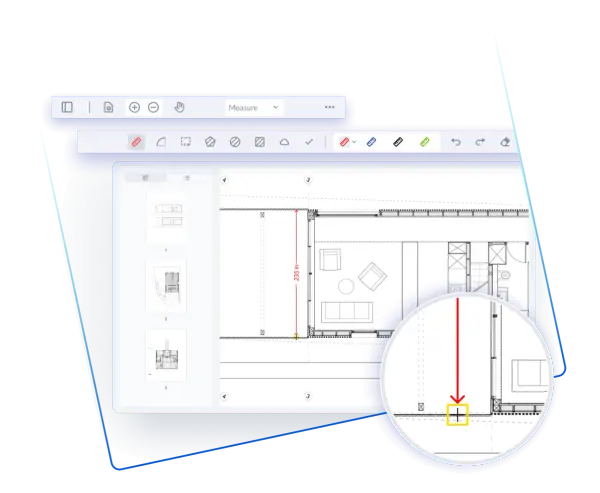
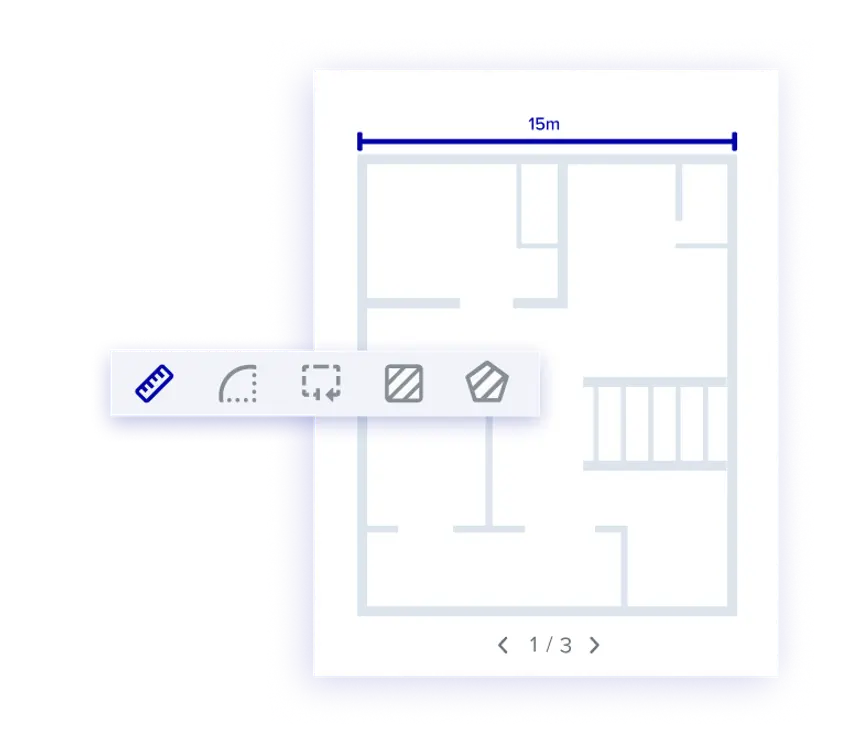
Embed accurate measurement and dimensioning into any document workflow. Measure distance, perimeter, area, arc length and radius, center angle, and object counts on PDFs and CAD files all in the browser. Measurements are stored as ISO 32000-compliant PDF annotations, so they stay portable across viewers and survive file exchange between teams.
Arc Measurements
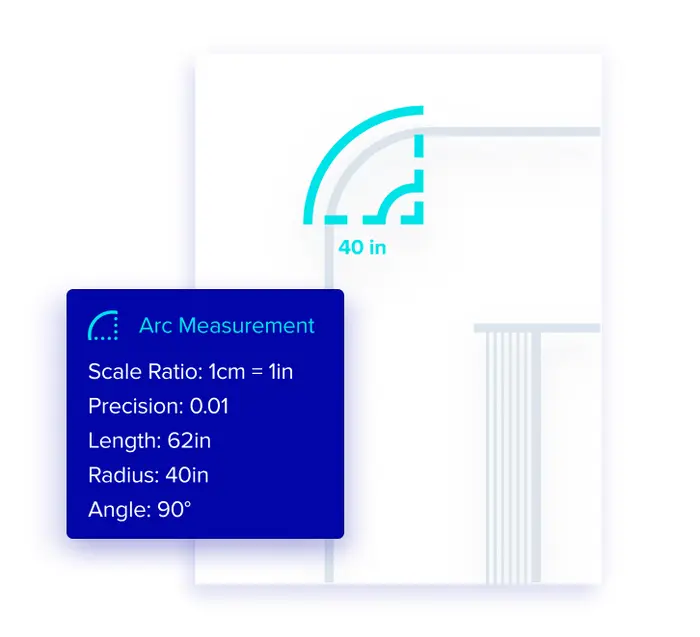
Measure curved lines using the arc measurement tool. Select a startpoint, a midpoint, and an endpoint to get arc length, arc radius, and the center angle measurements.
Object Snaps
Ensure accuracy with PDF measurement tools that snap to objects in drawings or plans. Snap to endpoints, midpoints, intersections, and more to get precise estimates and takeoffs from your software.
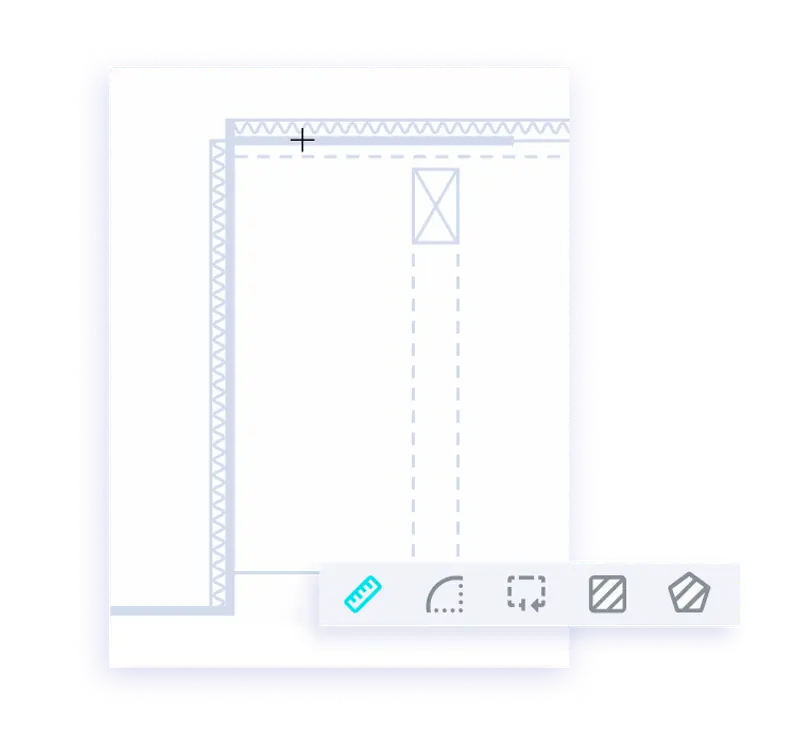
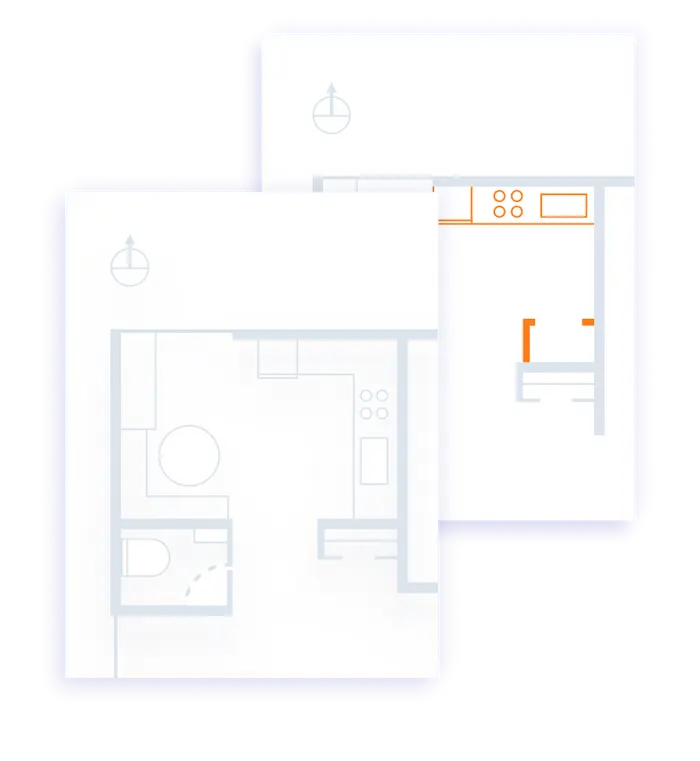
Image Overlay
Review changes in your document with side-by-side, pixel-by-pixel comparisons of versions.
Layer Support
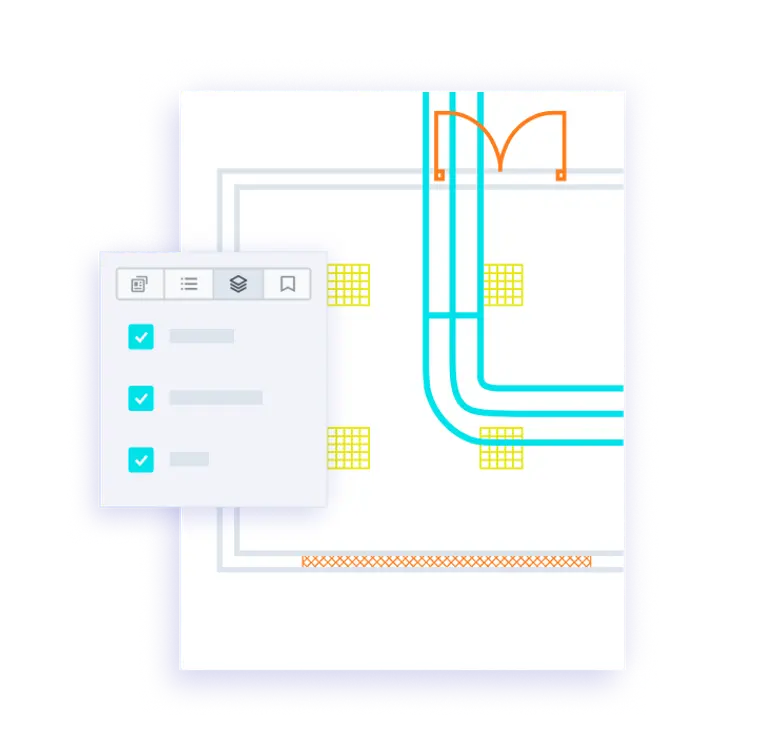
Programmatically create, extract, show, hide, and lock layers in construction drawings, maps, multi-language documents, and layered artwork. Toggle visibility for individual layers or groups to declutter complex CAD plans, and set default layer states that persist when the document is reopened in any PDF viewer.
Related Pages
Supported Integrations
Frequently Asked Questions
Apryse supports distance, perimeter, area (rectangular, polygonal, and freehand), arc length, arc radius, center angle, interior angle, ellipse, count, and calibration. All measurement types are available across web, mobile, and server SDKs and are stored as standards-compliant PDF measurement annotations.
Yes. Apryse converts DWG, DXF, DGN, RVT, and IFC files to PDF on the server, preserving layers, scale, and geometry. Measurements taken in the resulting PDF use the original drawing's scale, so a measured distance reflects real-world dimensions without manual calibration.
Creating measurement annotations in a web application is straightforward with Apryse. You can add various types of measurement annotations such as distance, perimeter, and area. For a detailed guide, check out the Measurement Annotations Documentation.
Can I extract measurement data programmatically? Yes. Every measurement annotation exposes its geometry, scale, units, and precision through the WebViewer API. You can iterate annotations through the AnnotationManager, filter by the presence of the Measure property to isolate measurements, and read values like annotation.Scale and annotation.Precision directly. Annotations export as XFDF (an XML standard) via exportAnnotations, and many teams store those XFDF strings as JSON blobs in their database or transform them into custom data models for quantity takeoff reports and BIM integrations.
Use Apryse's built-in calibration tool to draw a line over a known dimension on the page (for example, a printed scale bar or a labeled wall) and enter the real-world value in the Scale modal. WebViewer applies that scale to subsequent measurements made with the calibrated tool. You can also create and manage multiple scales within a single document and assign them to different measurement annotations, which is useful when a drawing set contains views at different scales.
Yes, there are video tutorials available that demonstrate how to use the measurement tools in WebViewer. One useful resource is the YouTube video titled How to Use Measurement Tools in WebViewer, which provides a comprehensive overview.
Apryse differs from alternatives like Nutrient and Foxit in three areas: native CAD format support without third-party plugins, a single unified API across web, mobile, and server, and ISO 32000-compliant measurement annotation output. See the Nutrient vs Apryse comparison for a feature-by-feature breakdown.