
Quick Summary
TL;DR
The EU AI Act is no longer a future regulation. As of August 2026, its transparency rules and prohibited-practice bans are already in force, and organizations that develop or deploy AI systems in the EU now face real, active obligations – with high-risk AI rules following on a delayed but confirmed timeline through 2027 and 2028.
- The EU AI Act is the world's first comprehensive legal framework for artificial intelligence, designed to ensure AI systems used in Europe are safe, transparent, and accountable. Organizations that fail to comply can face serious fines.
- As regulatory scrutiny increases, organizations must be able to demonstrate human oversight, trace decisions back to their source, and maintain reliable records of AI-assisted processes.
- Apryse provides the document processing components developers use to build traceable, auditable, and human-reviewed AI workflows.
Risk Categories of the AI Act
The EU AI Act takes a risk-based approach. The greater the potential impact of an AI system on people, safety, or fundamental rights, the stricter the compliance requirements:

Unacceptable Risk
AI practices considered a clear threat to individuals are prohibited. Examples include social scoring, exploitative AI targeting vulnerable groups, and certain real-time biometric identification systems used in public spaces.
High Risk
AI systems used in areas such as employment, education, critical infrastructure, healthcare, and law enforcement. These systems must meet strict requirements for risk management, data governance, documentation, and human oversight.
Limited Risk
AI systems with transparency obligations, such as chatbots or AI-generated content that must be disclosed to users.
Minimal Risk
Unregulated applications that pose little to no risk, such as AI-enabled video games or spam filters.
Who Does the AI Act Apply To?
The EU AI Act applies to organizations both inside and outside the EU whenever AI systems are placed on the EU market or their outputs are used within the Union.
Providers
Organizations that develop AI systems and place them on the EU market or put them into service.
Deployers
Organizations that use AI systems under their authority within the EU.
Organizations Outside the EU
Providers and deployers located outside the EU when the output of their AI system is used within the Union.
AI Act Implementation Timeline
The Act is being rolled out in stages through 2028. In May 2026, the EU adopted a "Digital Omnibus" amendment that pushed back several high-risk deadlines – the dates below reflect that update.
- August 1, 2024 – The EU AI Act entered into force.
- February 2, 2025 – Prohibited AI practices (Unacceptable Risk) became enforceable.
- August 2, 2025 – Rules for General-Purpose AI (GPAI) models and governance frameworks took effect.
- August 2, 2026 – Transparency obligations (Article 50) become enforceable, covering chatbots, emotion-recognition systems, and disclosure of AI-generated content.
- December 2, 2026 – A new prohibition on deepfakes/CSAM takes effect.
- December 2, 2027 – High-risk AI obligations for standalone systems under Annex III (employment, education, law enforcement, and similar sensitive-use categories) become enforceable.
- August 2, 2028 – Full compliance required for high-risk AI embedded in regulated products under Annex I.
How Apryse Supports EU AI Act Requirements
Pillar 1: Data Governance & Privacy
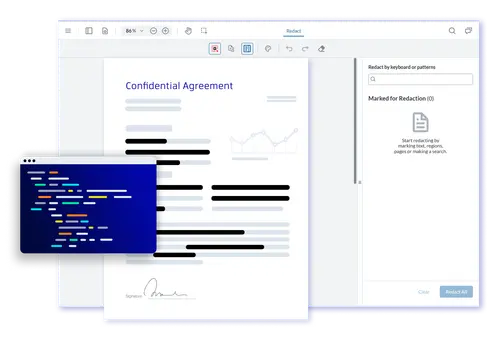
Before documents are used for AI training, retrieval, or inference, PII needs to be identified and removed. Apryse Redaction automates that – permanently removing personally identifiable information from documents at scale.
For scanned and image-based documents, OCR and ICR capabilities combine with redaction workflows to catch sensitive information sitting outside machine-readable text layers.
Pillar 2: Traceability & Record-Keeping
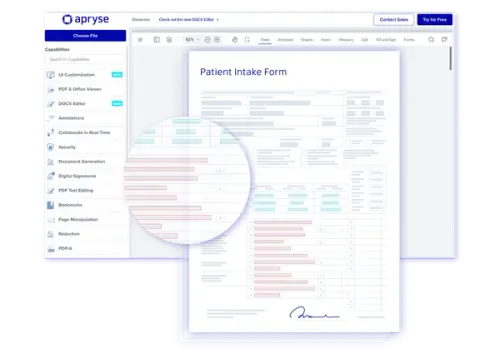
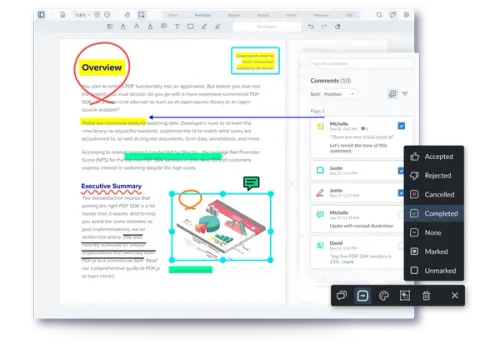
Compliance also means being able to show your work. Apryse Smart Data Extraction turns unstructured documents into structured, layout-aware JSON while preserving document context. This way, extracted data stays traceable to its original source, supporting transparency, auditability, and repeatability in document processing and RAG workflows.
Why Apryse?
Secure Deployment
Deploy document processing entirely in the browser, on private infrastructure, or within controlled cloud environments to keep sensitive information inside your organization's security boundaries.
High-Fidelity Document Processing
Industry-leading rendering and data extraction provide a reliable foundation for AI applications that depend on accurate document data.
Built for Enterprise Scale
Trusted by 85 of the Fortune 100 and backed by more than 25 years of document technology expertise, Apryse helps enterprises deploy document processing at production scale.
Get Exclusive Access to the
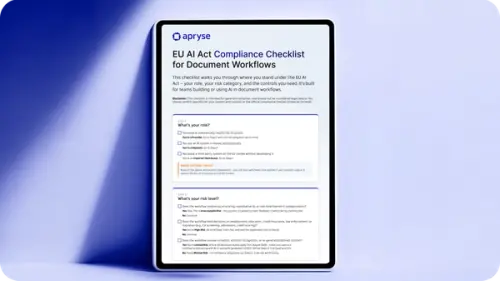
EU AI Act Compliance Checklist for Document Workflows
This checklist walks you through where you stand under the EU AI Act – your role, your risk category, and the controls you need. It's built for teams building or using AI in document workflows.
